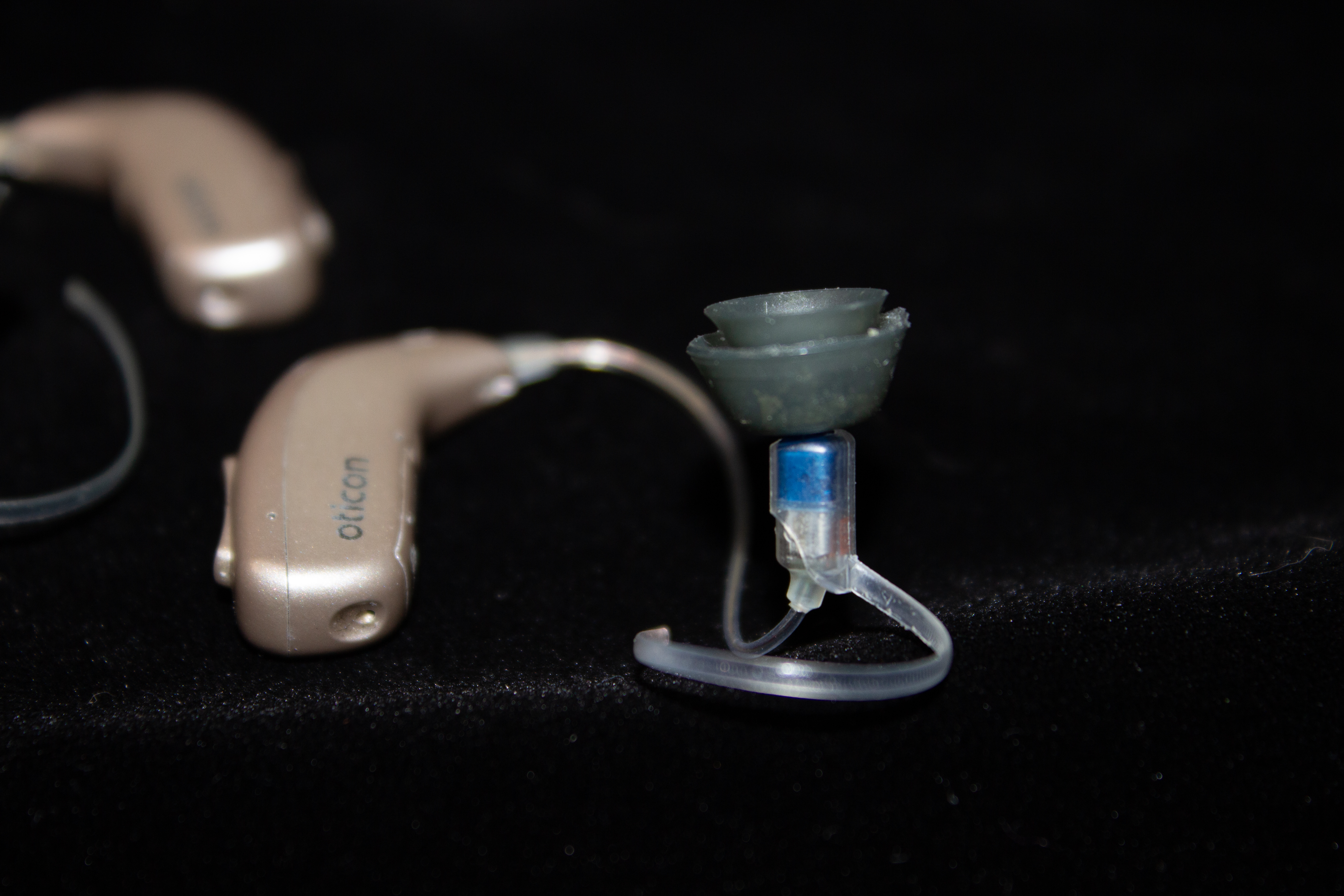
If you were asked to name a field where Danish companies quietly dominate the world, you might think of shipping, wind energy or design. You probably wouldn't think of semiconductors. But there is one category of chip — the ultra-low-power audio SoC inside a hearing aid — where Danish engineering teams have led the world for decades, and where they continue to set the global standard today.
"Three Danish companies, all within 25 km of each other, together hold roughly half the global hearing-aid market — and each designs its own custom chips."
Three companies, one cluster
The Danish hearing-aid industry is built around three companies, all headquartered north and west of Copenhagen, all with roots stretching back generations.
| Company | Founded | Brands | Market share |
|---|---|---|---|
| Demant A/S | 1904 | Oticon | |
| GN Hearing | 1943 (hearing line) | ReSound, Beltone, Jabra | |
| WS Audiology | 1956 (Widex) | Widex, Signia, Rexton |
How it started — a queen, a wife, and a wartime decision
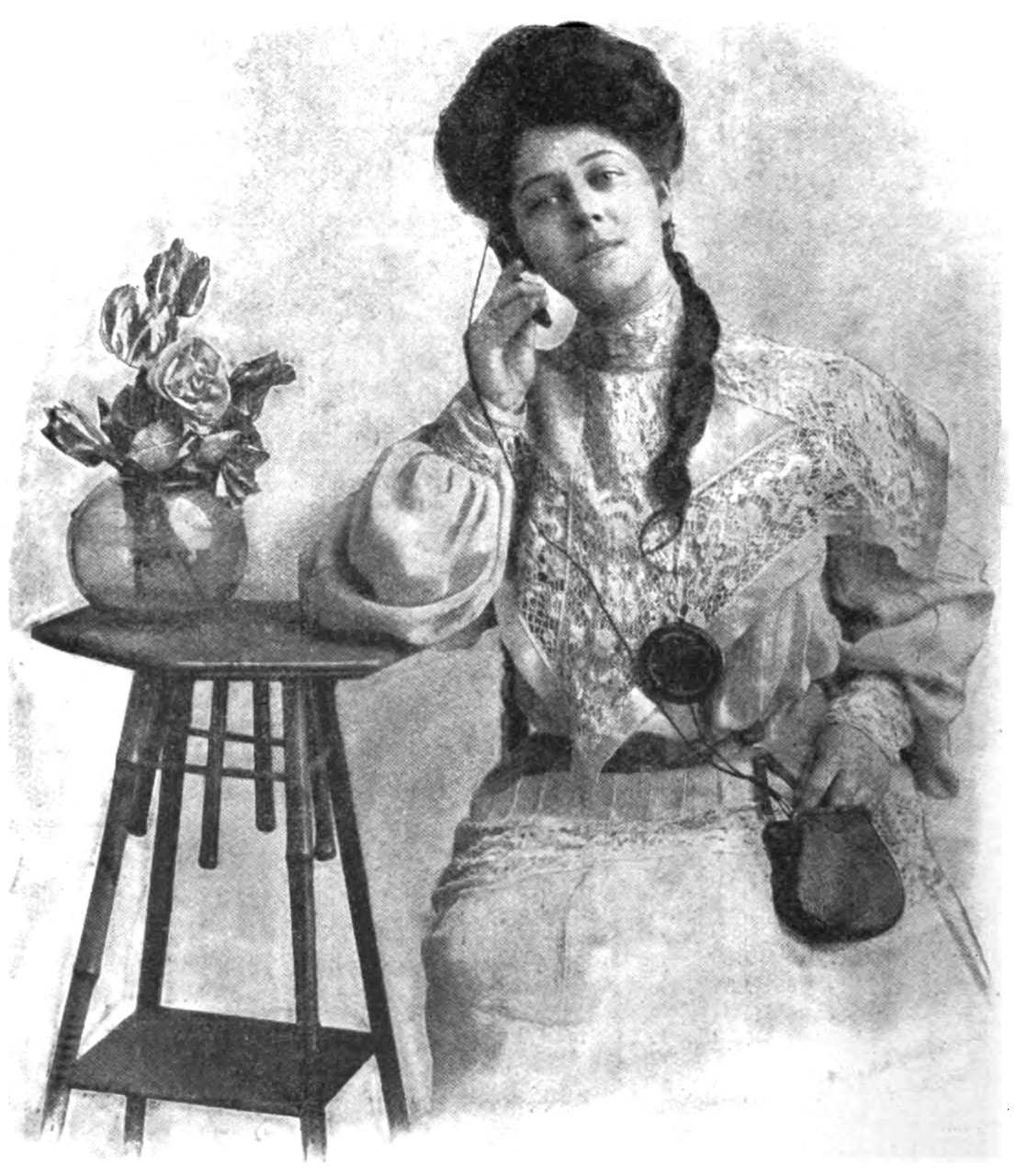
The story of Danish hearing-aid dominance begins in 1902, when the Danish-born Princess Alexandra was crowned Queen of England — wearing a hearing aid. Back in Denmark, a businessman named Hans Demant wanted to help his wife Camilla Louisa, who also had a hearing impairment. On 8 June 1904 he began importing Acousticon hearing aids from the United States — Denmark's first hearing-aid business.
The company might have remained an importer forever, but the Second World War changed that. During the Nazi occupation of Denmark, US components became impossible to obtain. The company — now run by Hans's son William Demant — had no choice but to start designing and building its own hardware. That wartime decision to manufacture rather than import set the direction for everything that followed: Oticon, and later all of Demant, has been a vertically integrated chip and device designer ever since.
GN Hearing's roots go even deeper. GN Store Nord — the Great Northern Telegraph Company — was founded in 1869 by Danish industrialist C.F. Tietgen to lay telegraph cables between Europe and Asia. Over a century later, the company pivoted to sound technology, acquiring the hearing-aid brand Danavox in 1977 and eventually building it into ReSound and Jabra. Widex was founded in 1956 in a cellar in Værløse by an electronics engineer and a businessman — the Tøpholm and Westermann families, who still own the company today.
Why this is a chip story, not just a medical devices story
A hearing aid looks simple. It is not. Fitting the necessary electronics into a device smaller than a pea — while keeping it running for days on a battery the size of a shirt button — is one of the hardest engineering problems in consumer electronics. Every milliwatt matters. Every cubic millimetre matters.
All three Danish companies solve this problem by designing their own custom chips — specialised pieces of silicon that could not be bought off the shelf because nothing off the shelf is good enough.
The results speak for themselves:
| Milestone | Company |
|---|---|
| ●World's first 2.4 GHz wireless hearing aid (2010) | GN Hearing |
| ●World's first Made-for-iPhone hearing aid (2014) | GN Hearing |
| ●Custom DSP chipsets designed and taped out in-house | Oticon |
| ●W1 chip developed for Allure platform; BLE Audio SoC co-developed with NXP | Widex |
These are not incremental product improvements. They are engineering firsts, achieved by in-house chip design teams working at the edge of what low-power mixed-signal electronics can do.
Three competitors, one research ecosystem
What makes the Danish hearing cluster structurally unusual — and unusually resilient — is something that has no obvious parallel elsewhere in the semiconductor industry: Oticon, GN Hearing and Widex, three direct commercial competitors, jointly fund academic research at DTU.
The result is not one centre but four, each with a distinct focus — together forming one of the most concentrated hearing research ecosystems in the world. PhD students and engineers move fluidly between them and the three companies, and each generation of hearing-aid chip trains the next cohort of designers.

The Eriksholm Research Centre, established by Oticon in 1976 in Snekkersten, takes the long-horizon approach even further. With around 40 scientists working on personalised audiology, cognitive hearing science and AI, it is deliberately separated from Oticon's product R&D — insulated from short-term commercial pressure so that fundamental research can take the time it needs.
Why Denmark — and why it stayed
The concentration of hearing-aid expertise in Denmark is not an accident of geography. Five factors created it and keep it here.
The first is the 120-year head start: Demant was designing and selling hearing aids decades before the industry existed in most countries. The second is that Denmark's small home market forced all three companies to sell internationally from day one — when the global consolidation wave of the 1980s and 90s hit, the Danish companies had already built the commercial scale to survive it.
The third is cluster dynamics: with all three majors within 25 km of each other, engineers, audiologists and suppliers move freely between them. The knowledge does not leave — it circulates. The fourth is ownership structure: the William Demant Foundation (Oticon) and the Tøpholm/Westermann family trust (Widex) are not subject to the quarterly earnings pressure of publicly listed competitors. That protects the multi-year R&D investments — including custom chip development — that are too slow to show up in a quarterly report but too important to skip.
The fifth, and perhaps the most important, is the university–industry consortium. The fact that three direct competitors jointly fund research at DTU is organisationally unusual anywhere in the world. It means the talent pipeline stays full, the fundamental research stays close to the engineering frontier, and the next generation of chip designers is trained in Denmark — not somewhere else.
Why this matters
The hearing-aid cluster is the clearest example anywhere in Denmark of what end-to-end semiconductor leadership looks like: Danish teams design the chip, the algorithm, the device and the clinical workflow — and hold global market share doing all of it. The expertise that produces hearing-aid chips is the same mixed-signal and low-power design expertise that feeds the rest of the Danish chip ecosystem, from audio startups to medical devices to defence electronics.
The template is visible and replicable: long-horizon ownership, a university–industry consortium that outlasts any individual company, and a relentless engineering culture that treats physical constraints not as limitations but as design challenges. Keep those three things intact, and Danish chip expertise will still be setting global standards in another 120 years.
Three things this story tells us
Sources
- Oticon — Wikipedia
- Oticon Celebrates Its Centennial — The Hearing Review
- Widex — Wikipedia
- GN Store Nord — Wikipedia
- Centre for Applied Hearing Research (CAHR) — DTU Health Tech
- Eriksholm Research Centre — Oticon
- Oticon Tapes Out Hearing-Aid DSP Using Synopsys IC Compiler
- NXP and Widex — Bluetooth LE Audio SoC
- Why is Denmark where it's at in hearing? — Audiology Worldnews
- The hearing-aid industry in Denmark — PubMed
Note: Market share figures vary by year and source — "roughly half" is the defensible phrasing. Oticon's chip design location and Widex's post-merger chip naming should be confirmed before publication.